Pads & brushes / Practical guide
Floor Cleaning Pads and Brushes: Choose the Right Accessory for the Job
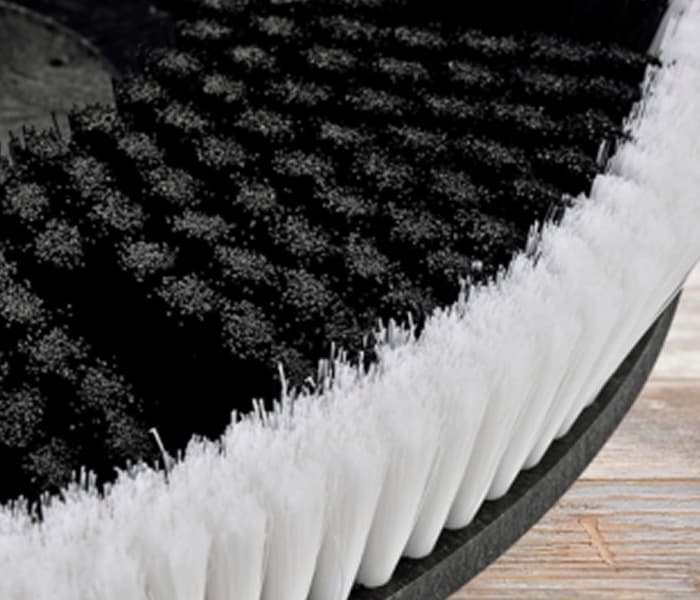
The same floor machine can produce very different results with different accessories. A pad that removes a coating is not the default choice for preserving that coating during daily cleaning. Start with the floor and the intended result, then check the machine and accessory together. Colour and diameter help identify a product, but they are not enough to approve it for a job.
The decision in three points
- Identify the floor, finish and intended cleaning result.
- Confirm product identity, fitting and operating speed.
- Trial the approved combination before applying it widely.
| Question | Floor pad enquiry | Brush enquiry |
|---|---|---|
| What must the process achieve? | Cleaning, treatment or finish removal, with the intended result stated | The soil and surface the brush must work on |
| What must fit the machine? | Pad dimensions and compatible pad driver | Brush dimensions, mount and model compatibility |
| What limits the application? | Floor/finish approval and the product's machine-speed rating | Floor/finish approval and the exact bristle specification |
| What should a trial assess? | Soil removal and the condition of the surface after the pass | Soil removal, coverage and the condition of the surface |
Step 01
Identify both the flooring and its finish
A floor description should include the surface material, applied finish and the result you need to preserve. Record whether the task concerns an existing coating, a worn area or soil sitting on the surface. If the finish is unknown, resolve that uncertainty before selecting an aggressive treatment. The flooring's care instructions provide the starting limits; the machine's capability does not override them.
Photographs are useful for discussing access and visible condition, but they may not identify an applied coating. Include the flooring or maintenance specification when available. For a facility enquiry in Pakistan, a small amount of accurate information is more useful than a long list of assumed materials. State what is known and what still needs confirmation.
Step 02
Distinguish daily cleaning from periodic treatment
Describe the job with a verb and an acceptance criterion. Daily cleaning might aim to remove ordinary soil while retaining the existing finish. A planned treatment may have a different objective, such as preparing a surface for a specified maintenance process. A visibly dirty area does not by itself establish that its coating should be removed.
Keep separate briefs for separate tasks. If the machine will perform routine maintenance and occasional treatment, request the approved accessory for each operation and label them accordingly. This reduces the risk of staff selecting a more aggressive accessory simply because it is already fitted. Include the changeover and cleaning procedure in the equipment handover.
Step 03
Use colour as a clue, not as the complete specification
Manufacturer descriptions attach applications to particular products. For example, 3M describes its Red Buffer Pad 5100 for light scrubbing and buffing, while its Black Stripper Pad 7200 is a stripping product. These examples explain why a colour label must be tied to a product identity. They do not approve every red or black pad for your machine or floor.
Ask for the accessory maker, product name or code, dimensions, intended application and permitted machine speed. Keep that information with the purchase record. When comparing suppliers, check that both quotations describe equivalent products rather than assuming that matching colours mean matching performance. Where the manufacturer offers a selection chart, read its application limits as well as the colour column.
Step 04
Confirm the driver, mounting and operating speed
A matching nominal diameter does not complete the compatibility check. A pad needs the correct driver, while a brush needs the correct attachment arrangement for the exact machine. Send the model identification and photographs of the existing accessory and mount. Ask the supplier to confirm compatibility in writing rather than relying on a photograph of a similar machine.
Check the machine's operating speed against the accessory's stated application. A product intended for one process or speed range is not automatically interchangeable with another. Do not increase speed or pressure to compensate for a poor match. The quotation should name the approved combination so the operator can repeat the intended setup when a replacement is ordered.
Step 05
Assess a brush by more than whether it still rotates
Inspect the brush using the machine manufacturer's permitted maintenance procedure. Record visible damage, uneven wear, debris and the current cleaning result. If the brush has reached a stated replacement limit, follow that limit. A machine can run while its accessory performs poorly, so a rotating head is not a useful acceptance test by itself.
For a brush-refilling enquiry, provide the brush dimensions, mount, machine model, intended surface and present symptoms. Ask whether the brush body is suitable for assessment and what bristle specification would be proposed. Moral Clean offers brush-refilling enquiries, but suitability and scope must be established for the actual item. Refilling is not a promise that every damaged brush body can be reused.
Step 06
Trial the approved combination on a representative area
Choose an agreed test area that reflects the working floor without exposing the whole site to an unconfirmed process. Record the accessory identification, machine settings, approved cleaning solution and result. Inspect the surface after the pass as well as the removed soil. A darker recovery tank does not, on its own, establish that the floor finish has been preserved.
Compare options using the same task and acceptable outcome. Include setup, cleaning, recovery where required and accessory care. If one option needs several passes, investigate whether the method is suitable before treating the extra time as unavoidable. Keep the successful trial record so subsequent operators and replacement orders use the same specification.
Step 07
Keep the accessory identifiable after purchase
Store the product identity and assigned task with the equipment records. Follow the accessory maker's cleaning, drying, storage and replacement instructions. Avoid mixing an unidentified used accessory into the routine simply because it fits the machine. When a problem appears, the supplier needs to know which product was fitted and how it was used.
A useful replacement enquiry contains the floor and finish information, task, model, accessory code and photographs of the existing fitting. State whether you need a replacement accessory, an assessment of the cleaning method or brush refilling. Ask for the proposed specification and scope before authorising work. That written record is the practical defence against repeating an unsuitable purchase.
Frequently asked questions
Is a black pad suitable for everyday floor cleaning?
Do not choose it by colour alone. Some identified black products are intended for stripping, which can conflict with a daily-cleaning goal of retaining the finish. Confirm the exact product, flooring approval and intended process.
Can any matching-size pad or brush fit my machine?
No. Confirm the driver or mount, model compatibility, dimensions and approved operating speed. A matching nominal diameter is only one part of the specification.
What information is needed for brush refilling?
Provide the machine model, brush dimensions and mounting photographs, the intended floor and current wear or performance issue. The brush body and proposed bristle specification need assessment before suitability or scope can be confirmed.
Manufacturer references
These references explain equipment principles. Confirm the features and instructions of the exact model being considered.
Your next step
Match the guide to your equipment shortlist.
- Single-disc brush refilling enquiries
- Single disc machines and accessory enquiries
- Brush refilling and equipment service enquiries
- Single disc machine versus scrubber dryer
- Prepare your maintenance or repair enquiry
Equipment knowledge
Keep exploring
3 min read
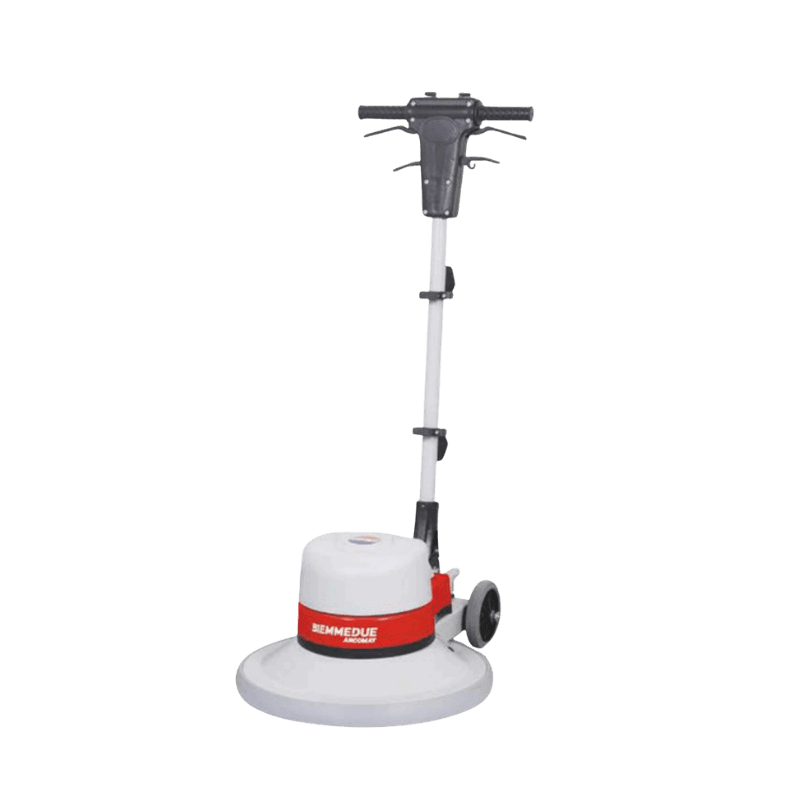
Single Disc Machine vs Scrubber Dryer: Which Cleaning Process Do You Need?
Compare single disc floor machines and scrubber dryers by scrubbing, water recovery, accessories and workflow before buying in Pakistan.
Read the guide
2 min read
Commercial Cleaning Machine Maintenance and Repair Enquiry Checklist
Prepare model details, symptoms and maintenance records for cleaning-machine repairs, parts replacement and brush-refilling enquiries in Pakistan.
Read the guide2 min read
Floor Cleaning Machine Costs in Pakistan: What a Quote Should Include
Understand equipment price factors, accessories, batteries, delivery and operating costs when requesting a floor cleaning machine quote in Pakistan.
Read the guide