Cleaning capacity planner / Practical guide
Floor Scrubber Cleaning Capacity Calculator: Plan Your Cleaning Time
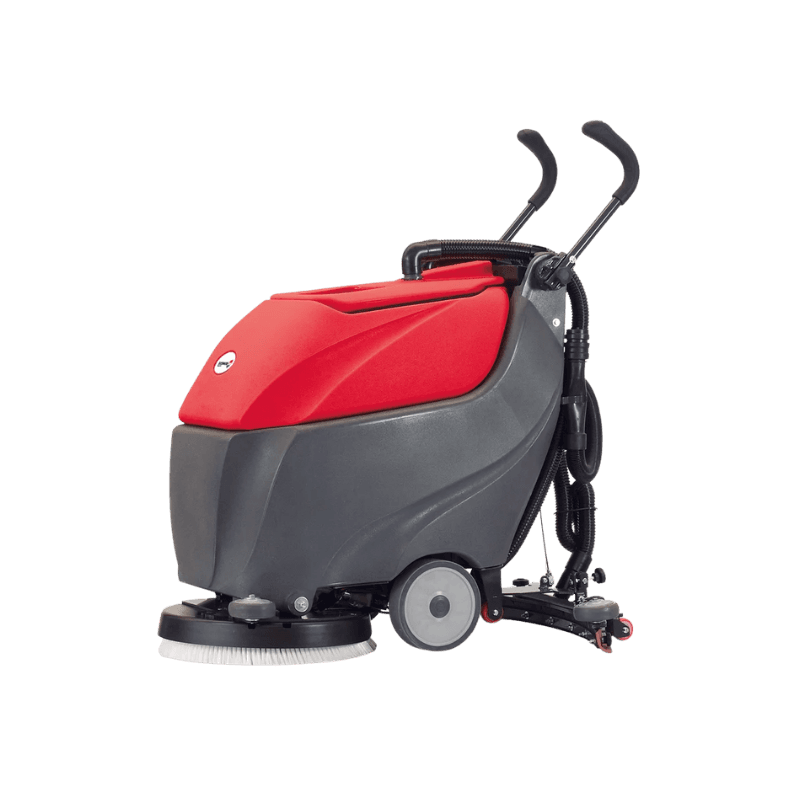
A scrubber's area-performance figure is useful only when you know what it includes. Straight travel over an unobstructed floor is different from cleaning around racks, stopping for water or preparing a machine. Use this calculator to make a preliminary time estimate for a defined route, then replace assumptions with observations from a representative trial. It is a planning tool, not a machine recommendation or an operating-speed instruction.
The decision in three points
- Keep width, speed and area units consistent.
- Show route and stop-time assumptions separately.
- Validate the estimate with a timed trial and cleaning-quality check.
Interactive planning tool
Estimate your cleaning window
The starting values are a hypothetical example, not a specification or performance promise for a Moral Clean model. Adjust them for one compatible scrubber and one pass over your route.
Exclude permanent obstructions and areas outside this machine's route.
Use the cleaning width, not the wider squeegee measurement.
Use an appropriate cleaning speed, not maximum transport speed.
A planning assumption for overlap, turns and interruptions. Replace with trial data.
Add only time not already included in your route allowance.
- Straight-line capacity
- 1,500 m²/h
- Assumed route capacity
- 975 m²/h
- Estimated total time
- 205 minutes
Area ÷ assumed route capacity × 60 + additional stop time. This does not check battery runtime, tank capacity, access or cleaning quality.
Step 01
Calculate straight-line capacity with consistent units
For a simple one-pass estimate, multiply brush working width in metres by cleaning travel distance in metres per hour. A hypothetical 500 mm cleaning width at 3 km/h gives 0.5 × 3,000 = 1,500 m²/h. The calculator accepts millimetres and kilometres per hour and makes those conversions. Use the working width of the brush head; a wider suction assembly is not the same measurement.
Kärcher's warehouse guidance distinguishes theoretical straight-line area performance from practical performance affected by turns and interruptions. Its general allowance is a useful reminder that real routes lose time, not a guaranteed result for another manufacturer or every warehouse. Use the exact model's documented cleaning specification and validate your own route.
Step 02
Make the route assumption visible
The example starts with a 65% productive-route allowance. This is an editable hypothetical assumption, not a published performance result. With the example's straight-line capacity of 1,500 m²/h, 65% produces an assumed route rate of 975 m²/h. Reducing the allowance increases the estimated cleaning time; increasing it requires evidence that the route can sustain the corresponding rate.
Identify what the allowance represents: overlap, turning, obstacles and routine interruptions can all affect progress. Then add only setup or stop time that has not already been included. If your measured route rate already covers filling, preparation and cleanup, enter zero additional time for those same activities. Counting them twice makes the estimate misleading.
Step 03
Use accessible cleaning area rather than building area
A facility's advertised size can include racks, fixed equipment, staircases or rooms outside the machine's route. Measure the floor area this machine is expected to clean in the selected pass. Keep separate areas requiring manual work or another process. If a second pass is needed, model that additional work explicitly instead of assuming one pass achieves the required result.
For 3,000 m² at the hypothetical route rate of 975 m²/h, movement through the route takes about 185 minutes. Adding 20 minutes of separately identified setup or stops gives about 205 minutes. This arithmetic example does not confirm the machine's battery runtime or tank capacity. It shows why both the route and non-cleaning tasks belong in the purchase brief.
Step 04
Validate the estimate with a timed trial
Choose a representative route with normal turns, access and the actual floor condition. Record area completed, elapsed time, stops and cleaning quality. Check whether the floor result is acceptable before treating faster movement as an improvement. An unsuitable brush, poor recovery or missed soil can invalidate a capacity comparison even when the time looks attractive.
Compare the observed cleaning window with battery operation, charging arrangements, tank handling and the site's available work period. The calculator does not evaluate any of those limits. Send your area, access restrictions, expected cleaning result and measured observations with the equipment enquiry so a model can be assessed against the complete job.
Frequently asked questions
Is the calculated time a guaranteed machine performance?
No. It is arithmetic based on the inputs and assumptions you choose. A compatible model, representative trial and acceptable cleaning result are needed to validate a plan.
Can I enter maximum travel speed?
Use a suitable documented cleaning speed or trial observation. Transport speed does not establish that the machine can clean properly at that speed.
Does this calculator recommend ride-on or walk-behind equipment?
No. It estimates time for a defined width and speed. Access, manoeuvrability, floor condition, recovery, tanks and battery arrangements require separate comparison.
Manufacturer references
These references explain equipment principles. Confirm the features and instructions of the exact model being considered.
Your next step
Match the guide to your equipment shortlist.
- Walk-behind versus ride-on scrubber dryers
- Warehouse equipment procurement checklist
- Walk-behind cleaning equipment
- Ride-on cleaning equipment
Equipment knowledge
Keep exploring
2 min read
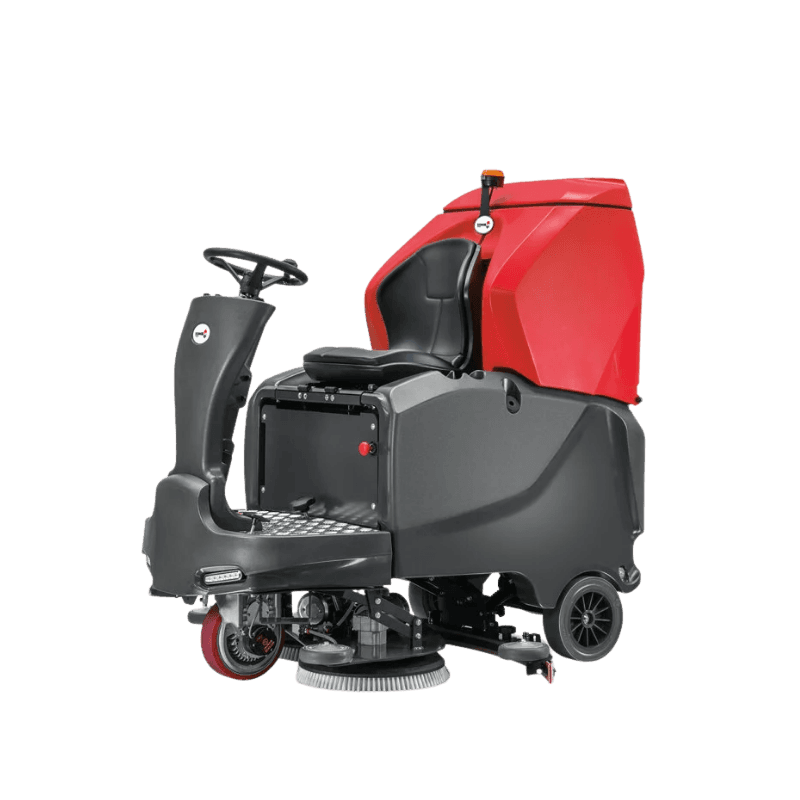
Walk Behind vs Ride On Scrubber Dryer: Choosing for Your Facility
Compare access, cleaning routes, tanks, power and operating costs before choosing a walk behind or ride on scrubber dryer for a facility in Pakistan.
Read the guide3 min read
Floor Sweeper vs Scrubber Dryer: Choosing for Dust, Debris and Adhered Soil
Choose between sweeping and wet scrubbing using debris, surface, route access and disposal requirements. Compare commercial cleaning workflows in Pakistan.
Read the guide3 min read
Warehouse Floor Cleaning Equipment: A Procurement Checklist for Pakistan
Build a warehouse cleaning-equipment brief using floor condition, aisles, traffic, dust, water access and practical route testing before requesting quotations.
Read the guide