Scrubber troubleshooting / Practical guide
Floor Scrubber Not Picking Up Water: Checks Before Booking a Repair
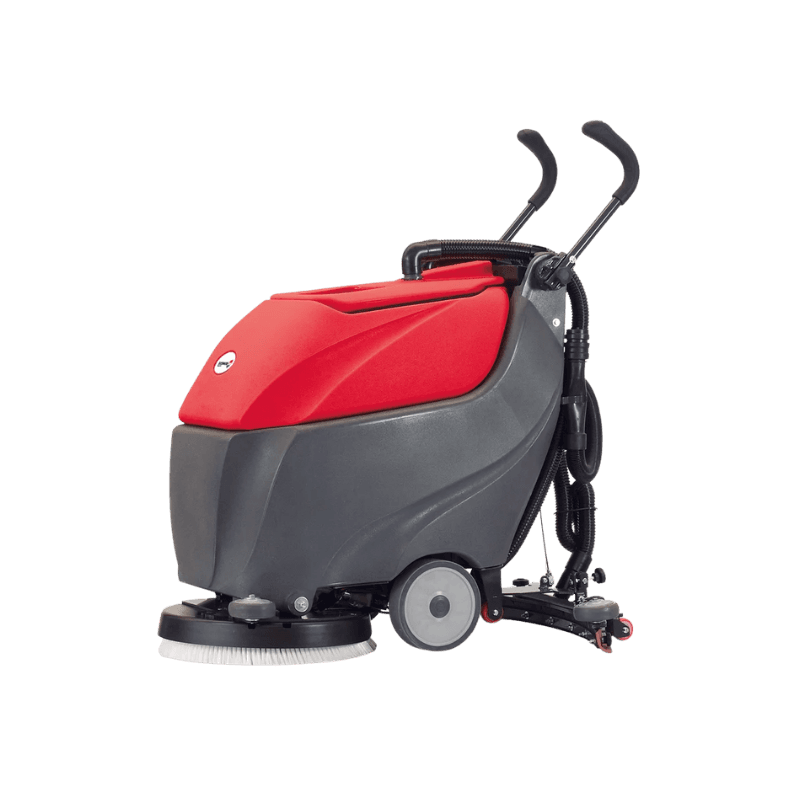
A floor scrubber that leaves dirty water behind has a recovery problem to investigate, not an automatic diagnosis of a failed motor. Water pickup depends on several connected items, including the squeegee, suction path and recovery tank. Begin with the symptom and the checks allowed by the exact machine's manual. Keep the affected route controlled until it is safe for normal use.
The decision in three points
- Control the wet route and record the water trail.
- Perform only the operator checks permitted by the manual.
- Send model details and observations for a specific assessment.
| What you observe | What to record | What it does not prove |
|---|---|---|
| A narrow streak | Its position and whether it appears on straight passes or turns | That the vacuum motor needs replacement |
| Water left across the path | Recovery controls, tank condition and visible connections | A single cause without further assessment |
| Pickup worsens during a shift | Time of onset, tank level and any visible foam | That a larger machine is required |
| A change after maintenance | Parts fitted and the setup changed | That the new part is necessarily faulty |
Step 01
Make the route safe and describe the water trail
Stop leaving an uncontrolled wet route for other people to cross. Apply the site's wet-floor procedure and arrange appropriate recovery of the remaining liquid. Before inspecting equipment, follow the manufacturer's shutdown and isolation instructions. Limit operator checks to those explicitly permitted; this article is a way to organise an enquiry, not a substitute for the model's service instructions.
Record whether the machine leaves one narrow line, misses one side, leaves water across the path or performs poorly only on turns. Note whether the issue exists immediately or develops later in the shift. Photograph the trail and the machine's identification. These observations make a repair discussion more specific than saying that the scrubber no longer cleans properly.
Step 02
Check the recovery setup before assuming a component has failed
Use the operator manual to confirm the normal recovery controls and setup. Record warning messages and whether the machine responds as expected. Check the accessible items the manual identifies for routine care, and note anything recently changed. Do not bypass a shutoff, repeatedly reset a protection device or open electrical components to keep the machine running.
The aim is to establish a reproducible symptom. A recovery setting that was not enabled and an electrical fault can both produce a complaint about water left behind, but they require different actions. Give the service contact the observations rather than choosing a replacement part before the machine has been assessed.
Step 03
Inspect the squeegee within the operator-maintenance limits
The squeegee helps guide liquid toward the recovery inlet. Look for visible debris, uneven contact or wear using the permitted inspection procedure. A streak's position can be useful evidence, particularly when it repeats in the same place. Record what you see before removing or adjusting anything, then carry out only the care steps specified for the model.
Tennant's T20 troubleshooting guide identifies worn blades, adjustment and trapped debris among possible causes of poor pickup. This is model-specific evidence, not a universal instruction to rotate or adjust every blade. Before ordering replacements, confirm the part identification, material, mounting and the maintenance procedure for your own machine.
Step 04
Record accessible hoses, connections and tank closures
Follow the manual's routine inspection of the recovery path. Photograph accessible hose connections, any visible damage and the condition of closures. Where the approved procedure includes cleaning an accessible item, complete that step as directed. Avoid probing a hose or dismantling components using an improvised method that the instructions do not permit.
If a connection or closure was disturbed during recent cleaning or maintenance, include that timing in the enquiry. A problem that began immediately after a change provides a useful place for an authorised assessment to start. It still does not prove the changed component is defective, so keep the account factual: what was changed, when it was changed and what happened afterwards.
Step 05
Note when the problem appears and the tank condition
Record whether pickup changes as the recovery tank fills and whether visible foam is present. Ask the operator what solution was used and how it was dosed, referring to the approved instructions. Do not add an unapproved chemical to suppress a symptom. Emptying and cleaning should follow the machine manual and the site's disposal procedure.
Keep shift notes specific. For example, record that pickup was satisfactory at the start and poor after a particular route, rather than claiming that the motor overheats without evidence. Include the tank condition, warnings and operating time at the point of failure. A short repeatable record is more useful to a technician than several conflicting guesses.
Step 06
Use a controlled retest and an explicit stopping point
After permitted operator care, check the result on a small, controlled area using the normal approved process. Compare the trail with the original observation and keep the route managed. If the problem persists, the next step is assessment rather than cycling through speculative parts. Do not increase solution flow, change chemistry or defeat a protection device to force a result.
Stop using equipment when its manual or the site's procedure requires it, or when abnormal operation makes continued use unsafe. Electrical work, internal motor diagnosis and component replacement belong with qualified personnel. The operator's useful contribution is the history and the accessible observations, not a dismantled machine with missing information.
Step 07
Send a repair brief that supports a real diagnosis
For an enquiry with Moral Clean, send the facility location, machine make and model, identification-plate photograph and a short description of the water trail. Include when it began, warning messages, recent maintenance, visible wear and which permitted checks were completed. Add the intended workload and the time available for assessment so the service discussion has a practical context.
Ask what inspection is proposed and request confirmation of any replacement part and repair scope before work proceeds. Keep the findings with the maintenance record, including the symptom, assessed cause and verified result. The purpose is to restore the required pickup performance, not to replace the most expensive component merely because the original complaint mentioned suction.
Frequently asked questions
Does poor water pickup mean the vacuum motor has failed?
No. Several recovery-system conditions can produce poor pickup. Record the symptom and complete only the operator checks allowed by the model's manual before arranging assessment. Internal electrical or motor diagnosis needs qualified personnel.
Can I use less water and continue cleaning?
Changing the process does not establish that the recovery fault is resolved. Follow the machine instructions and the site's wet-floor procedure. If the route cannot be left safe, stop and arrange the appropriate recovery and assessment.
What should I send when requesting scrubber-dryer repair?
Send the model identification, facility location, trail photographs, timing of the problem, warnings, recent maintenance and the permitted checks already completed. Confirm assessment and repair scope before authorising parts or work.
Manufacturer references
These references explain equipment principles. Confirm the features and instructions of the exact model being considered.
Your next step
Match the guide to your equipment shortlist.
- Request a cleaning-machine repair assessment
- Cleaning-machine assessment and service enquiries
- Maintenance and repair enquiry checklist
- Walk behind scrubber equipment
- Choosing floor-cleaning pads and brushes
Equipment knowledge
Keep exploring
5 min read
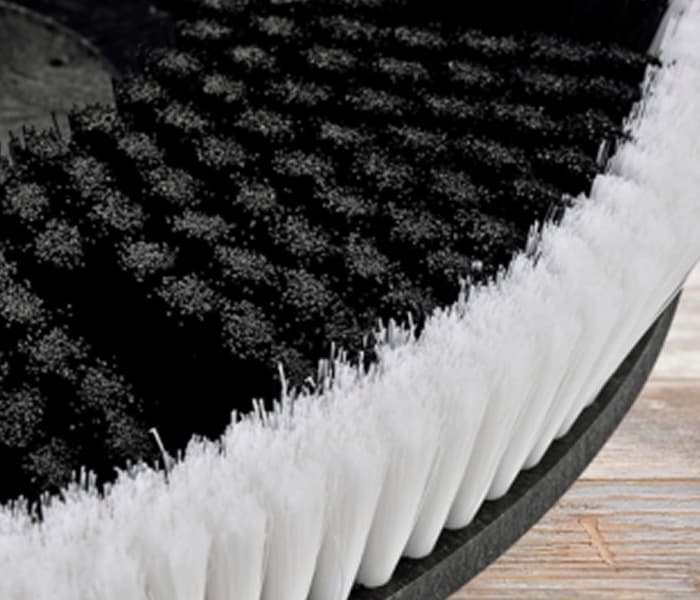
Floor Cleaning Pads and Brushes: Choose the Right Accessory for the Job
Choose floor cleaning pads and brushes by surface, finish, task, machine speed and fitting. Build a clear accessory or brush-refilling enquiry in Pakistan.
Read the guide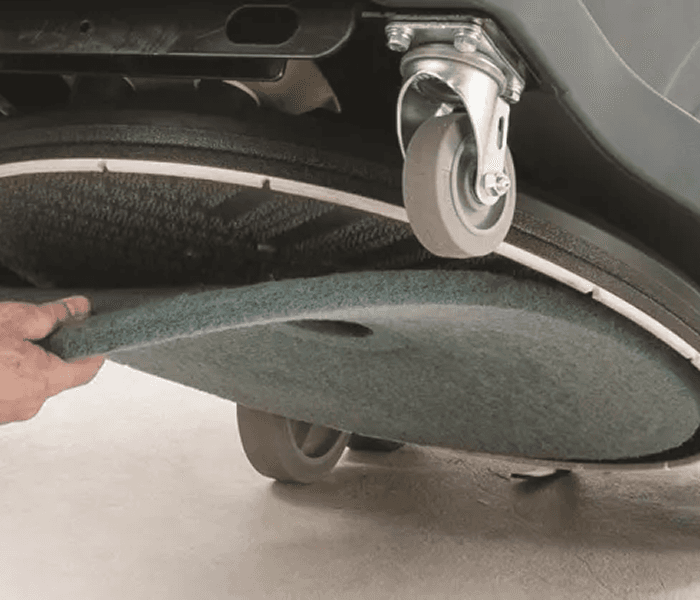
2 min read
Commercial Cleaning Machine Maintenance and Repair Enquiry Checklist
Prepare model details, symptoms and maintenance records for cleaning-machine repairs, parts replacement and brush-refilling enquiries in Pakistan.
Read the guide3 min read
Floor Scrubber Cleaning Capacity Calculator: Plan Your Cleaning Time
Estimate a scrubber's cleaning window using floor area, brush width, speed and route assumptions. Understand theoretical capacity, stop time and a real site trial.
Read the guide